
Pool Design
Plunge pools and cocktail pools look nearly identical in photos but serve different purposes. Compare typical size, depth, and 2026 cost ranges.
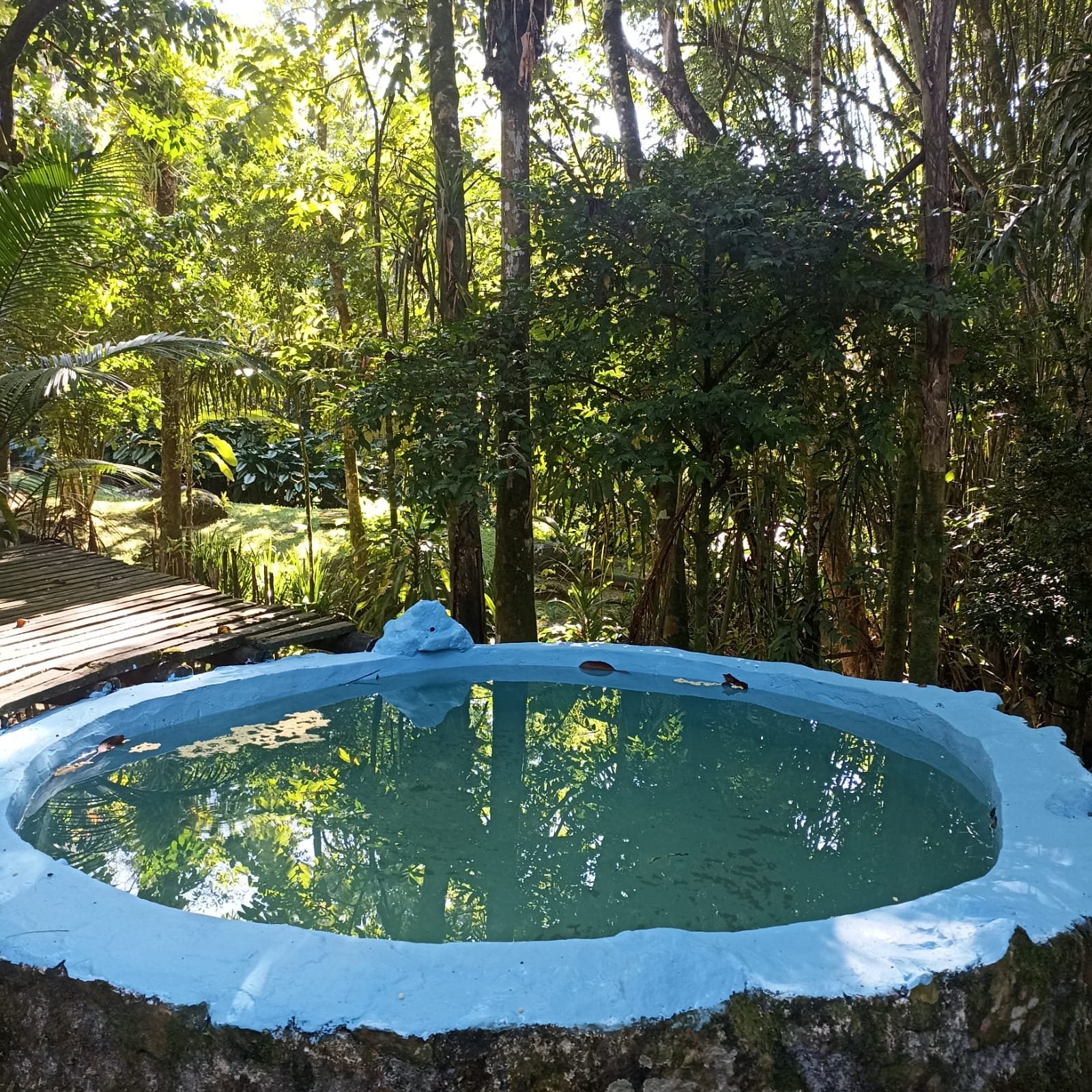
Scroll through enough backyard pool photos and plunge pools and cocktail pools start to blur together. Both are compact. Both fit yards that could never hold a traditional 30-foot rectangle. Both show up constantly in 2026 small-yard design roundups. But the two formats are built to do different jobs, and that difference matters more than the photos suggest once you’re deciding what to actually put in your own backyard. This guide compares the two side by side: typical size, depth, cost, and which one fits a given yard and budget better.
TL;DR: Plunge pools and cocktail pools are close cousins, both compact (roughly 7-16 feet long) and both suited to small yards, but they’re built for different things. A plunge pool is deeper (4-5+ feet) and designed for full-body cooling off and light exercise; a cocktail pool is shallower (3-4 feet) and designed around sitting, standing, and socializing. Pricing overlaps heavily: plunge pools average around $28,000 ($10,000-$40,000 range), and cocktail pools run similarly, roughly $25,000 at the standard tier, up to $50,000+ with premium finishes.
In this article:
- What’s the Actual Difference?
- Plunge Pools: Built for Cooling Off, Not Swimming Laps
- Cocktail Pools: Built for Socializing
- Why This Format Is Having a Moment in 2026
- Which One Fits Your Yard and Budget?
- Frequently Asked Questions
- The Bottom Line
What’s the Actual Difference?
The real difference between a plunge pool and a cocktail pool is depth and purpose, not overall footprint. Both formats occupy roughly the same amount of yard, but a plunge pool digs deeper so a person can submerge and move through the water, while a cocktail pool stays shallow so people can stand, sit on a built-in ledge, and talk without treading water.
That distinction shows up clearly once the numbers are laid side by side.
| Plunge Pool | Cocktail Pool | |
|---|---|---|
| Typical length | 7-15 ft | 10-16 ft |
| Typical width | Varies, generally narrower | 6-10 ft |
| Typical depth | 4-5+ ft | 3-4 ft |
| Primary use | Full-body cooling off, light exercise | Standing, sitting, socializing |
| Typical cost | ~$10,000-$40,000 (avg. ~$28,000) | ~$25,000 standard, up to $50,000+ premium |
Sources: Latham Pool, Cowboy Pools, Leisure Pools, Plungie, Pentarm Pools, Yardzen, The Pool Nerd.
Both formats trade lap-swimming distance for a small footprint. The choice between them comes down to what you actually want to do in the water once it’s built. Placement matters too, and it’s one place the two formats genuinely converge: both can be built fully in-ground, semi-inground with part of the shell exposed above grade, or as a raised, deck-mounted structure. That placement decision is driven more by yard slope, soil conditions, and budget for excavation than by whether you land on a plunge pool or a cocktail pool.
Plunge Pools: Built for Cooling Off, Not Swimming Laps
A plunge pool typically runs 7 to 15 feet long and 4 to 5 feet deep or more, sized for full-body immersion rather than swimming laps (Latham Pool, Cowboy Pools). The added depth is the whole point. It’s enough water to submerge to the shoulders or neck, tread water, or do a slow lap of water aerobics without ever needing the 30- to 40-foot length a traditional pool requires for actual swimming.
That depth is also why plunge pools show up so often paired with a swim jet or current system: since the pool itself is too short to swim across in more than a couple of strokes, a jet lets someone swim in place against a generated current instead. Not every plunge pool includes one, but it’s a common add-on for anyone who wants a workout rather than just a cool-off.
The same depth also explains why plunge pools overlap with the cold-plunge and contrast-therapy trend. A plunge pool sized for full-body immersion can be chilled well below standard pool temperature and used the same way a stand-alone cold-plunge tub is, either on its own or alternated with a hot tub or sauna nearby. That’s not a use case a shallow cocktail pool supports in the same way, since it’s built for standing rather than full submersion.
On cost, plunge pools run $10,000 to $40,000 installed, averaging around $28,000 (Pentarm Pools, Yardzen). Where a given project lands in that range depends heavily on shell material (fiberglass tends to sit lower, custom concrete higher), site access, and whether features like a swim jet, heater, or spa function are included. A prefabricated fiberglass plunge pool dropped into an already-graded yard sits near the bottom of the range; a custom concrete plunge pool with a swim jet and integrated spa can push toward the top of it or past it.
For more on how shape and layout choices play out in a tight footprint, see our guide to the best pool shapes for compact backyards.
Cocktail Pools: Built for Socializing
A cocktail pool typically runs 10 to 16 feet long, 6 to 10 feet wide, and only 3 to 4 feet deep, built around standing and sitting rather than submersion (Leisure Pools, Plungie). That shallower water is intentional. It’s deep enough to cool off and lounge in, but shallow enough that most adults can stand comfortably throughout, which is exactly what a design built around entertaining needs. Many cocktail pools include a built-in bench or ledge running along one or more sides, turning the pool itself into part of the seating arrangement rather than just something to swim in.
Cost lands close to the plunge pool range: around $25,000 at the standard tier, climbing to $50,000 or more with premium finishes like natural stone coping, integrated lighting, or a raised spa (The Pool Nerd).
It’s worth being honest here: the line between these categories isn’t as fixed as this comparison might suggest. Several manufacturers and retailers use “cocktail pool,” “soaking pool,” and “dipping pool” more or less interchangeably, and some treat all of them as marketing variations on the same underlying product family as a plunge pool. The depth and use-case pattern described above holds up as a general rule and is useful for planning, but don’t be surprised if a builder in your area uses these terms loosely or applies “plunge pool” to something with cocktail-pool proportions. When you’re getting quotes, describe what you actually want the pool to do (submersion versus lounging) rather than relying on the label alone.
For more design inspiration across compact pool formats, browse the modern pool design gallery.
Why This Format Is Having a Moment in 2026
Compact pool formats are gaining ground in 2026 because outdoor living is shifting toward daily-use space rather than lap-swimming, and shrinking average lot sizes make that shift practical rather than optional. A pool that fits a 15-by-20-foot patio is a realistic option for a lot of yards where a full-size in-ground pool never was.
That shift shows up in broader 2026 outdoor living data, even outside pools specifically. The Forbes/Yardzen 2026 Outdoor Living Trend Report found native planting requests up 23% year over year, traditional lawn area down 25% year over year, and requests for privacy features up 10% year over year. None of those figures are about pools directly, but together they describe the same underlying trend: yards are being redesigned around smaller, more intentional, more private outdoor spaces rather than large open lawns. A compact pool that tucks into a corner and pairs with dense planting for privacy fits that pattern directly.
For a broader comparison of pool shapes and formats suited to small lots, see our guide to choosing a pool for a small backyard, which covers shape and layout considerations beyond the plunge-versus-cocktail question.
Which One Fits Your Yard and Budget?
Choose a plunge pool if the priority is actually cooling off or exercising solo; choose a cocktail pool if the priority is entertaining and shallow lounging space for a few people at once. Both fit a similar footprint and a similar budget, so the deciding factor is almost always how you picture using the water, not which one costs less.
A few practical questions can settle it quickly:
- Do you want to submerge to your shoulders and tread water, or would you rather sit on a built-in bench with a drink in hand? That’s plunge versus cocktail in one question.
- Will more than two or three people use it at the same time regularly? A wider, shallower cocktail pool handles a small group more comfortably than a narrow plunge pool does.
- Is a swim jet or current system something you’d actually use, or is it a nice-to-have you’d skip? That feature leans strongly toward plunge pool territory.
Budget add-ons tend to land on both formats equally, which is worth knowing before you assume one is the “cheaper” path. A heater, cover, saltwater system, or automation package costs roughly the same whether it’s attached to a plunge pool or a cocktail pool, since those systems are sized to water volume rather than pool category. If your budget is tight, cutting an add-on will move the number more than switching formats will.
Because the two formats look so similar in photos, they’re also one of the harder pool decisions to visualize from a listing page or a builder’s brochure alone. Seeing how each format looks in your own yard tends to settle the decision faster than photos alone. Uploading a photo of your own backyard to an AI pool visualizer and generating both a plunge pool and a cocktail pool layout side by side tends to make the difference obvious in a way a spec sheet doesn’t: one reads as a deep soaking tub, the other as a shallow social pool, even at nearly identical dimensions.
Frequently Asked Questions
What’s the difference between a plunge pool and a cocktail pool? Depth and purpose. A plunge pool runs 4 to 5 feet deep or more and is built for full-body cooling off and light exercise. A cocktail pool stays shallower, typically 3 to 4 feet, and is built around standing, sitting, and socializing rather than submersion.
Which is cheaper, a plunge pool or a cocktail pool? Neither format has a clear cost advantage. Plunge pools average around $28,000 ($10,000-$40,000 range), and cocktail pools run roughly $25,000 at the standard tier up to $50,000+ with premium finishes. Finish level, shell material, and site conditions drive cost far more than the choice between these two formats.
Are plunge pools worth it for small yards? Yes, when full-body cooling off or light exercise matters more to you than lounging and entertaining space. A plunge pool delivers real submersion depth in a footprint that fits most small yards. If entertaining a few people at once is the bigger priority, a cocktail pool’s shallower, wider layout is usually the better fit for the same amount of space.
The Bottom Line
Plunge pools and cocktail pools solve different problems inside almost the same footprint and budget. If you want water deep enough to actually cool off in or move through, lean plunge. If you’re designing around sitting, standing, and hosting a few people at once, lean cocktail. Cost won’t settle the decision for you since both formats land in a similar $25,000-$40,000 range before premium finishes, so it comes down to how you picture using the pool day to day.
Before committing to either format, it’s worth seeing both laid out in your actual yard rather than judging from a builder’s brochure. This guide was researched and written by noda, a software developer who built Backyard Pool AI after his own struggle to budget a backyard pool project. Read more about how this site approaches pool cost and design coverage on our about page, or get in touch with questions or a correction. For the full library of cost, design, and maintenance guides, visit the Backyard Pool AI blog.